See
Computer vision that never looks away
AI continuously reads the CCTV feeds your facilities already operate. It surfaces the moments people cannot reliably catch across dozens of screens and thousands of hours of footage.
Capabilities
Reduce loss, improve compliance, and pull operational data from the CCTV you already run. PPE and HSE governance, loitering and intrusion, pallet counting, ANPR, and the security patterns your sites need.
A signal becomes valuable only when the system knows what it means and what should happen next.

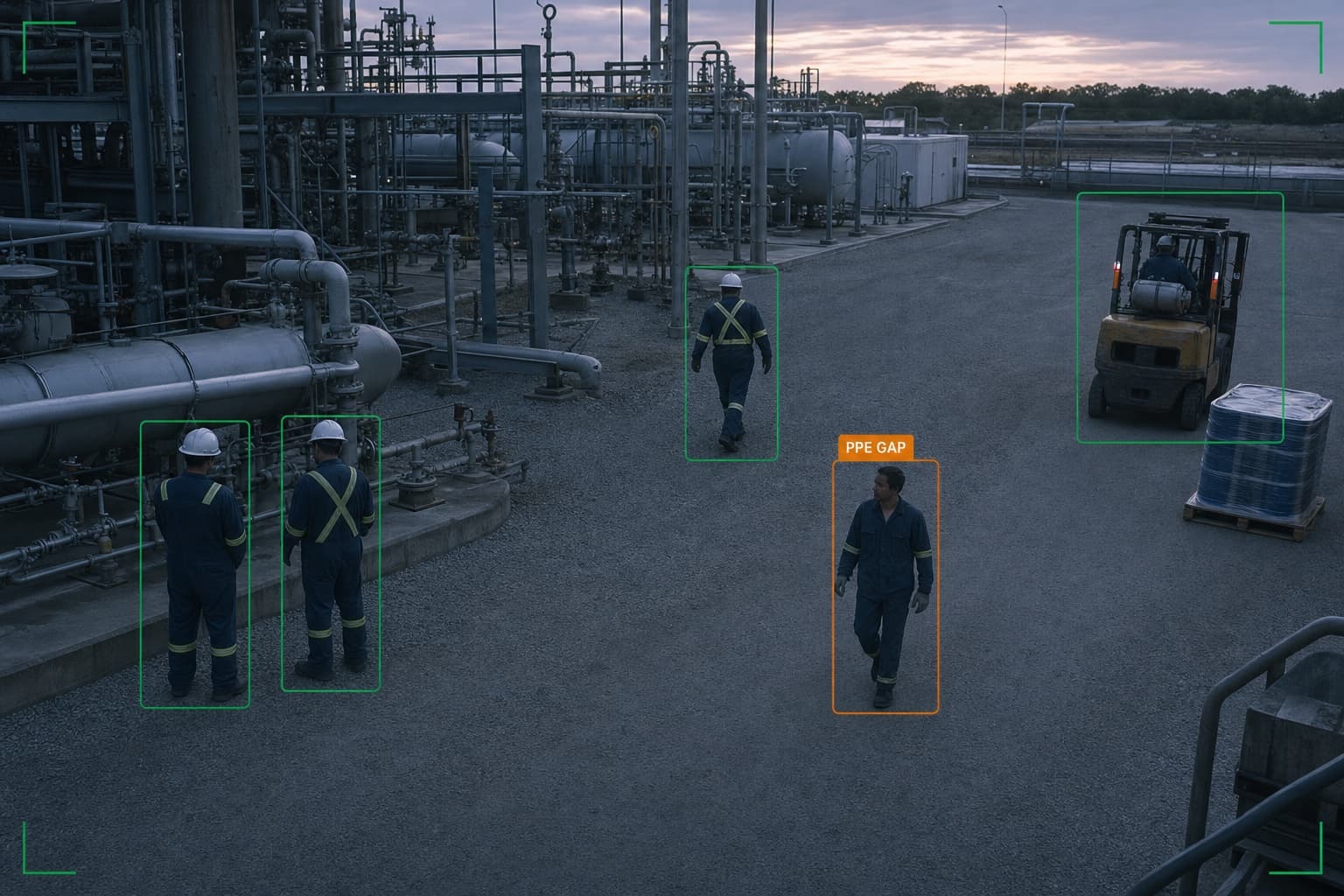
On a single view, the platform tracks people, vehicles, and objects, holds each against the rules for that zone, and flags what matters: a missing hard hat, a loitering figure at the dock, a plate that should not be at the gate, or a pallet count that does not match the manifest.
Computer vision that never looks away
AI continuously reads the CCTV feeds your facilities already operate. It surfaces the moments people cannot reliably catch across dozens of screens and thousands of hours of footage.
Context that knows why it matters
A hard hat missing in a general walkway is not the same event as missing protection inside hot work. Ceraphys Labs combines each observation with facility zones, required PPE, equipment movement, severity policy, and recent frames.
Intelligence distilled into the next action
The system turns what it sees and understands into a prioritized review, an escalation, a leading indicator, a workforce risk signal, or a pre-filled compliance record, so the right person knows what to do next.
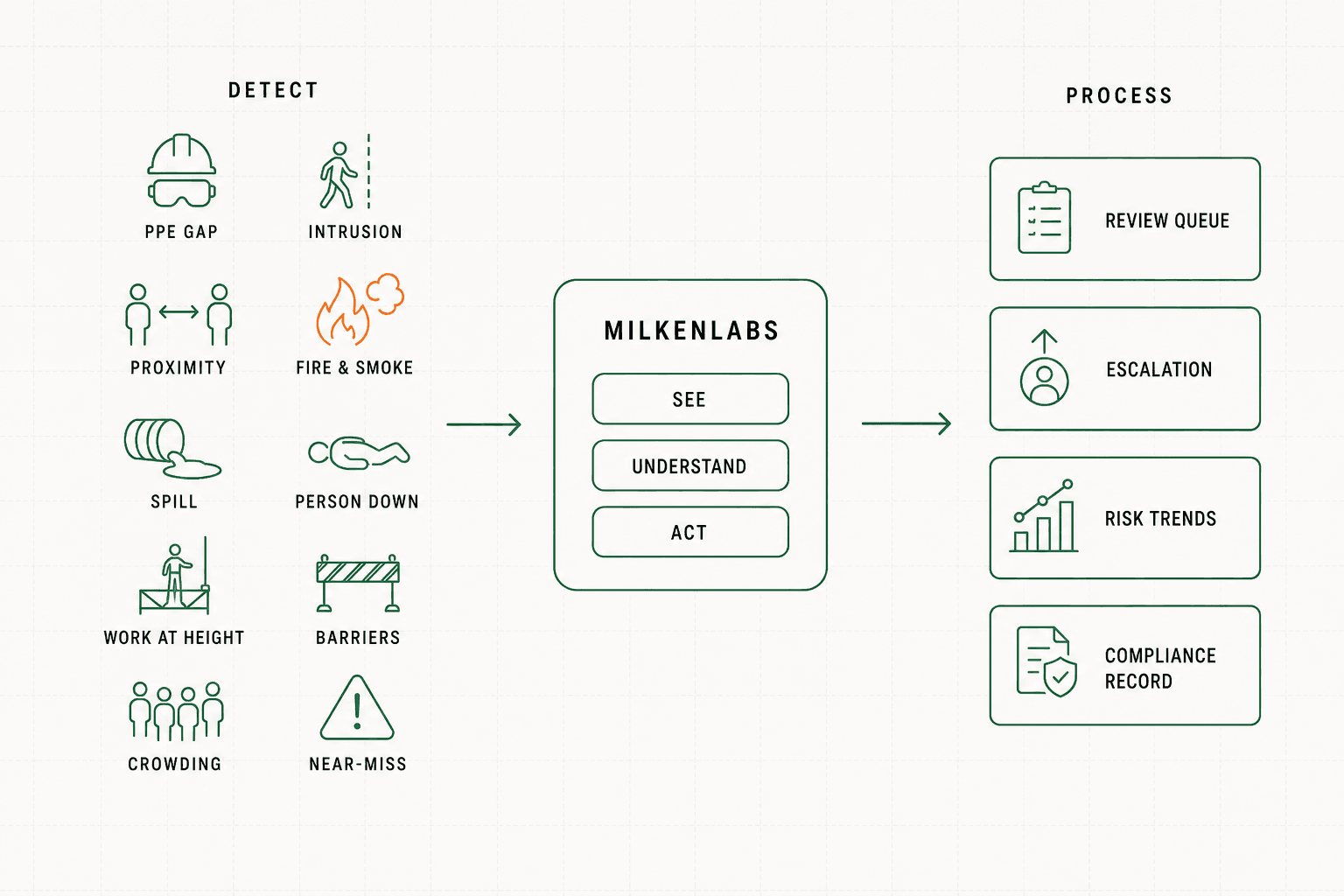
Dozens of distinct hazards — PPE gaps, zone intrusions, unsafe proximity, fire and smoke, spills, falls and more — resolve into a single pipeline. Each is seen, understood, and acted on, then turned into a review queue, escalations, risk trends, and an audit-ready compliance record.

Start with the outcome you need. Expand to the next when the signal and workflow prove out on your site.
Flag missing hard hats, vests, and zone violations in hot work, confined space, and loading bays. Human review before anything enters the record.
After-hours presence, perimeter breaches, and dwell time in staff-only or high-value areas. Alerts in seconds, not at shift end.
Read plates at entry points, match against allow lists, and log vehicle flow for yards, plants, and port gates.
Count stacks and staging areas from overhead or aisle cameras. Feed operations teams numbers they can reconcile against manifests.
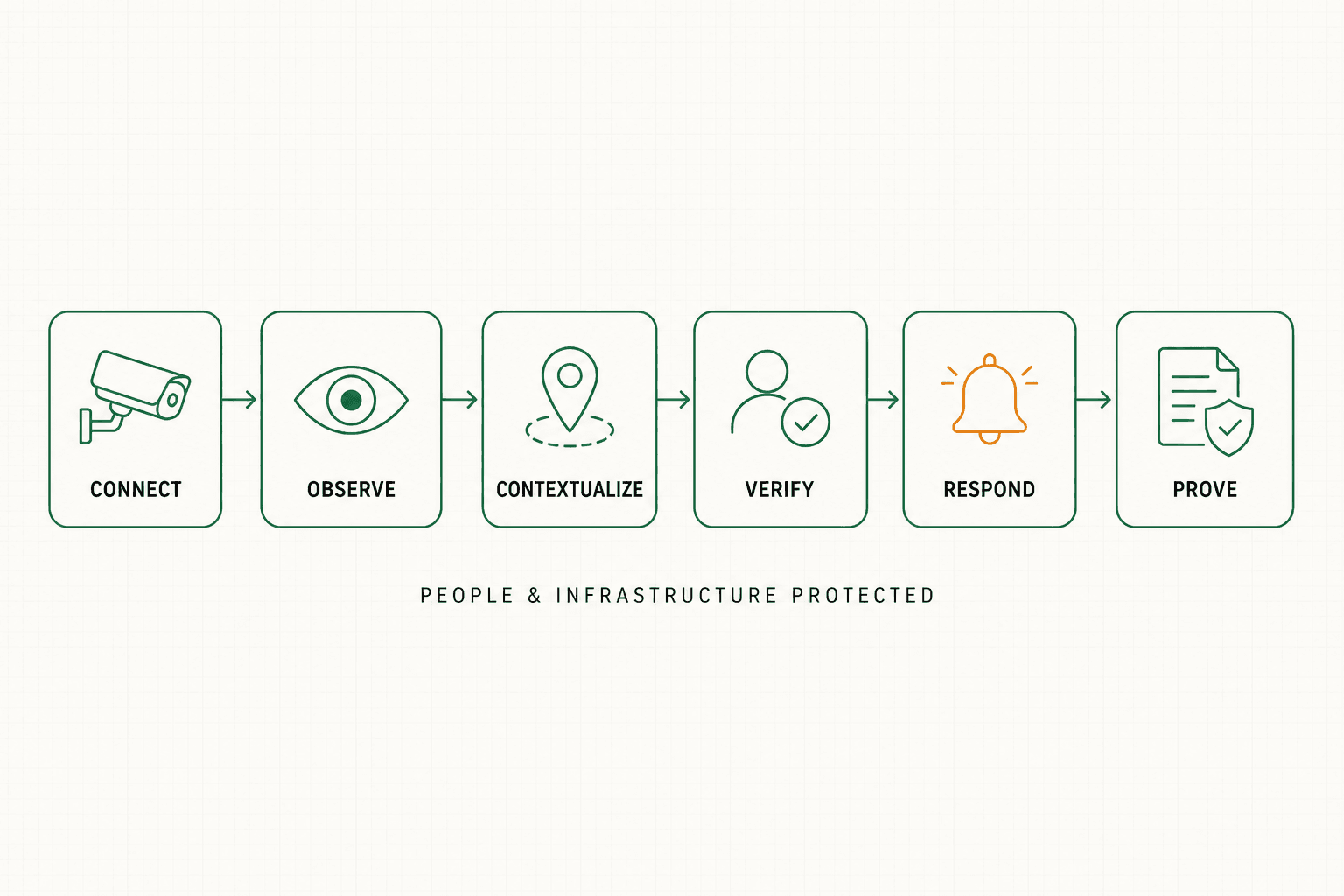
One continuous path connects a camera at the perimeter to a decision a manager can defend: connect to what is already installed, observe, contextualise by zone, verify with a human, respond, and prove it with a record.

Connect
Ceraphys Labs connects to existing RTSP and ONVIF cameras across plants, warehouses, yards, retail sites, ports, and construction zones. Edge appliances sample and analyze feeds without replacing the CCTV investment you already made.
Operational impact
Bring facilities online faster, preserve existing infrastructure, and extend safety coverage without building a parallel camera estate.
Observe
Multiple vision providers work together to identify people, PPE, fire, smoke, forklifts, excavators, ladders, barriers, phones, smoking, and fallen persons. Temporal logic distinguishes simple proximity from a closing-distance near-miss.
Operational impact
Surface weak signals while there is still time to intervene, not after an injury, damaged equipment, or an operational shutdown.
Contextualize
Teams draw camera-level polygons for restricted, hazardous, hot-work, confined-space, general, and muster zones. Each zone carries its own PPE requirements. The rules engine combines detections, location, motion, and policy to determine severity.
Operational impact
Reduce alert noise and focus attention on the events with the greatest consequence in that exact place and moment.
Verify
Reviewers confirm, dismiss, or escalate events in a focused queue. Fire, spills, and person-down events never silently close themselves. Models propose; accountable people decide.
Operational impact
Build trust with operations teams, preserve oversight for critical decisions, and create a reliable history of who decided what.
Respond
Severity policies, critical banners, open exceptions, facility snapshots, employee risk signals, and camera coverage warnings create one shared picture of HSE posture. A failed or stale feed appears as a safety blind spot, not a buried IT ticket.
Operational impact
Help control rooms and HSE leaders direct limited attention where it can prevent the most harm and downtime.
Prove
Verified events pre-fill incident, unsafe-act, near-miss, and NOSDRA spill records with linked evidence and metadata. Approval remains human-controlled, while append-only audit logs preserve the chain from detection to export.
Operational impact
Spend less time reconstructing incidents and chasing spreadsheets; arrive at reviews, insurer conversations, and audits with a defensible record.
Cameras, people, review, reporting, and compliance do not live in separate tools. Each one adds context to the next, creating a system that learns from the operation and makes its history useful.
One evidence pipeline for live feeds, uploaded footage, and manually raised events.
Connect safety patterns to the workforce without removing consent or human judgment.
A shared safety picture across facilities, cameras, devices, and teams.
Turn the operating history into leading indicators and records people can act on.
Move safety from retrospective investigation to continuous prevention by detecting leading indicators as work happens.
Reduce the injuries, stoppages, equipment incidents, and investigation delays that turn safety failures into lost man-hours.
Give control rooms, HSE leaders, and executives one current view of events, blind spots, exceptions, trends, and compliance gaps.
Transform footage into structured operational memory: searchable, attributable, reviewable, and ready to support the record.
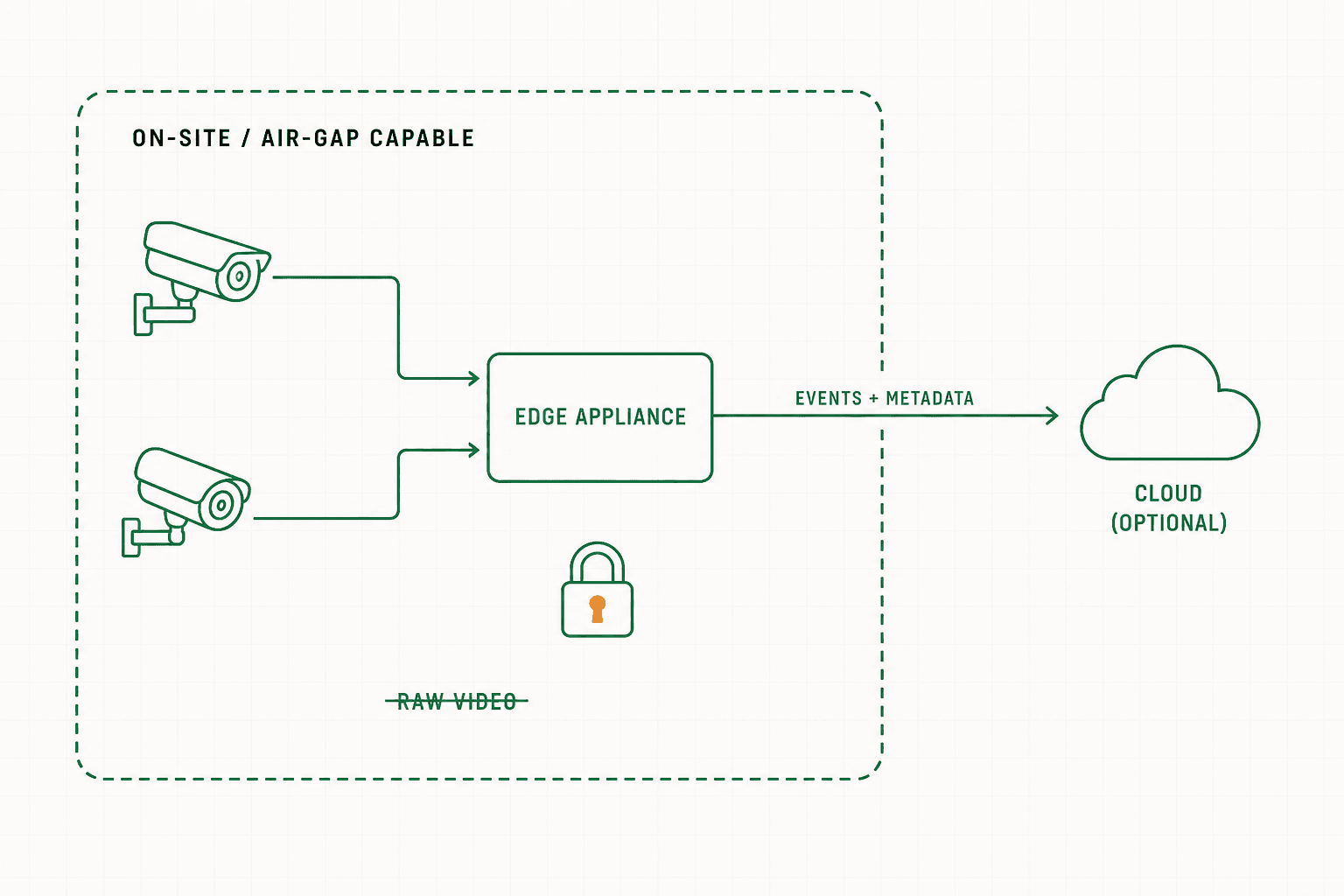
Raw video stays on site. The cloud receives structured events, metadata, and consented evidence references, not a continuous stream of your operation.
Workforce identity is consent-gated. Opted-out employees are excluded from matching. Retention is controlled per organization, and every compliance-relevant action is attributable.

Start with one facility. Prove the signal, the workflow, and the impact against the operation you already run.